+91 9988 500 936

info@microwavecomputer.com

Mon - Sat: 8:30 am- 6:00 pm

#DigitalMarketing

Inbound, content, SEO, social, email, PPC, mobile, video, tools, influencer, data.

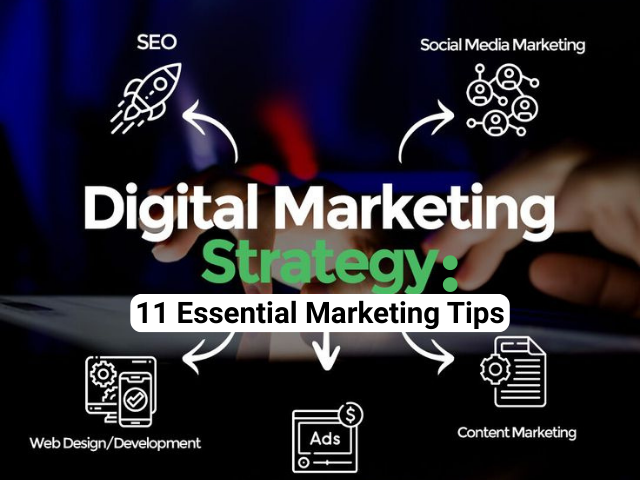
Digital Marketing Strategies: 11 Essential Marketing Tips

 Digital Marketing Strategies: 11 Essential Marketing Tips  Digital Marketing Strategies: 11 Essential Marketing Tips  Digital Marketing Strategies: 11 Essential Marketing Tips  Digital Marketing Strategies: 11 Essential Marketing Tips Digital Marketing Strategies: 11 Essential Marketing Tips In today’s digitally dominated business landscape, effective digital marketing strategies are not just an option; they are a necessity. With the rapid evolution of technology, consumer behavior, and online platforms, staying ahead in the digital marketing game requires a well-informed and adaptable approach. In this comprehensive guide, we will delve deep into 11 essential digital marketing tips, providing in-depth explanations and insights for each concept. By the end of this article, you’ll be equipped with a solid understanding of these strategies to boost your online presence and drive tangible results. 1. Define Your Goals Before diving into the world of digital marketing, it’s crucial to define your goals clearly. Your goals serve as the guiding light for your entire digital marketing strategy. Are you aiming to increase brand awareness, generate leads, drive sales, or enhance customer loyalty? Each goal requires a different approach and set of tactics.  In-depth Explanation: Brand Awareness: If your primary goal is brand awareness, focus on creating compelling and shareable content that showcases your brand’s personality and values. Lead Generation: For lead generation, employ strategies like content marketing, email campaigns, and gated content to capture valuable customer information. Sales Conversion: To boost sales, emphasise conversion optimisation, user experience enhancements, and personalised product recommendations. Customer Loyalty: To enhance customer loyalty, prioritise customer engagement, post-purchase follow-ups, and loyalty programs. 2. Know Your Target Audience Understanding your target audience is the cornerstone of any effective marketing strategy. You need to identify who your potential customers are, what their pain points are, and what motivates their purchasing decisions. Detailed research allows you to create accurate buyer personas, which are fictional representations of your ideal customers. In-depth Explanation: Demographics: Analyse demographic factors such as age, gender, location, and income to understand your audience’s basic characteristics. Psychographics: Dive into psychographics, including interests, values, lifestyles, and behaviour patterns, to gain deeper insights into their motivations. Pain Points: Identify the challenges and pain points your audience faces, which your products or services can address. Buyer’s Journey: Map out the stages of the buyer’s journey (awareness, consideration, decision) to tailor your content and messaging accordingly. 3. Develop a Strong Website Your website serves as your digital storefront, making a lasting impression on visitors. It needs to be visually appealing, user-friendly, and optimised for search engines (SEO). In-depth Explanation: Design and User Experience: Invest in a clean, intuitive design that guides users seamlessly through your site. Ensure fast loading times and mobile responsiveness. SEO Optimisation: Optimise your website’s on-page elements, including meta tags, headers, and keyword usage, to improve its search engine ranking. Content Strategy: Create and regularly update valuable and informative content that resonates with your target audience. 4. Content is King Quality content lies at the heart of any successful digital marketing strategy. Content comes in various forms, such as blog posts, videos, infographics, and podcasts, all of which serve to engage and educate your audience. In-depth Explanation: Educational Content: Offer informative content that addresses your audience’s questions and provides solutions to their problems. Entertaining Content: Use entertaining and engaging content to captivate your audience and keep them coming back for more. Storytelling: Share compelling stories about your brand, customers, or products to create an emotional connection. Consistency: Maintain a consistent posting schedule to keep your audience engaged and informed. 5. Embrace Search Engine Optimization (SEO) SEO is a fundamental aspect of digital marketing that can significantly impact your website’s visibility in search engine results. It involves optimising your website’s content and structure to rank higher in organic (non-paid) search results. In-depth Explanation: On-Page SEO: Optimise individual pages by using relevant keywords, meta descriptions, and headings. Ensure proper formatting and internal linking. Off-Page SEO: Build high-quality backlinks from reputable websites to boost your site’s authority and credibility. Keyword Research: Conduct thorough keyword research to identify the terms and phrases your target audience is searching for. Local SEO: If your business has a physical presence, optimise for local search results by creating a Google My Business profile and obtaining customer reviews. 6. Leverage Social Media Marketing Social media platforms offer a vast opportunity to connect with your audience, build relationships, and drive engagement. Each platform has its unique features and audience demographics, so tailor your approach accordingly. In-depth Explanation: Platform Selection: Choose the social media platforms that align with your target audience’s preferences. For example, Facebook is diverse, while Instagram is highly visual. Content Strategy: Develop a content calendar and create a mix of text, images, videos, and stories to keep your audience engaged. Community Building: Actively engage with your audience, respond to comments, and encourage user-generated content. Advertising: Consider paid social media advertising to extend your reach and target specific demographics. 7. Email Marketing Email marketing remains a highly effective way to nurture leads and maintain customer relationships. Building and segmenting your email list and sending targeted, personalised emails can yield excellent results. In-depth Explanation: List Building: Create sign-up forms on your website to collect email addresses. Offer incentives like eBooks or discounts to encourage sign-ups. Segmentation: Segment your email list based on demographics, behaviour, and preferences to send highly relevant content. Automation: Implement email automation sequences to nurture leads, send welcome emails, and follow up with customers after purchases. Personalisation: Craft personalised emails that address the recipient by name and tailor content to their interests and previous interactions. 8. Pay-Per-Click Advertising (PPC) PPC advertising allows you to reach your target audience through paid ads on search engines and social media platforms. It offers precise targeting options and can deliver immediate results when executed effectively. In-depth Explanation: Keyword Research: Conduct thorough keyword research to identify the most relevant and cost-effective keywords for your ads. Ad Copywriting: Create compelling ad copy that highlights your unique selling points and encourages click-throughs. Budgeting and Bidding: Set a daily or monthly budget …

Digital Marketing Strategies: 11 Essential Marketing Tips Read More »

A person earning commission through affiliate marketing by promoting products online.

What is Affiliate marketing and its most significant benefits?

What is Affiliate marketing and its most significant benefits? Affiliate marketing is a popular online marketing strategy where individuals or businesses earn a commission by promoting and selling products or services on behalf of another company. It serves as a win-win situation for both the affiliate marketer and the company, as it allows for increased brand exposure, expanded customer reach, and potential revenue generation. The affiliate marketing process typically involves three key parties: the advertiser (or merchant), the affiliate (or publisher), and the consumer. The advertiser is the company or brand that owns the product or service and wishes to promote it. The affiliate is the marketer who promotes the product or service through various channels. The consumer is the target audience who purchases the product or service through the affiliate’s referral. To get started in affiliate marketing, individuals or businesses can join affiliate programs or networks. These platforms connect advertisers with potential affiliates and provide the necessary tools and resources to track sales, manage commissions, and facilitate payments. Common affiliate networks include Amazon Associates, ClickBank, ShareASale, and Commission Junction. Once enrolled in an affiliate program, affiliates receive unique affiliate links or banners to embed in their marketing materials. These links contain tracking codes that identify the affiliate responsible for referring the customer. Affiliates then promote the products or services through their websites, blogs, social media channels, email marketing, or other online platforms. When a consumer clicks on the affiliate link and completes a purchase, the affiliate receives a commission as compensation. Commissions can be based on various models, such as a percentage of the sale, a fixed amount per sale, or a combination of both. The specific commission structure is typically determined by the advertiser and outlined in the affiliate program terms. Affiliate marketers who achieve success utilize a range of tactics to optimize their earnings. They focus on selecting niche products or services that align with their target audience’s interests and needs. They create compelling content, including product reviews, tutorials, comparison guides, and promotional offers, to engage their audience and drive conversions. Establishing trust and cultivating a loyal audience are essential components for achieving sustained success over time in affiliate marketing. Additionally, affiliates leverage search engine optimization (SEO) techniques to improve their website’s visibility in search engine results, driving organic traffic to their affiliate links. They may also utilize paid advertising, such as pay-per-click (PPC) campaigns, to generate targeted traffic and increase their chances of earning commissions. While affiliate marketing offers potential opportunities for passive income and flexibility, it requires dedication, strategic planning, and continuous optimization. Successful affiliates constantly analyze their performance, track conversion rates, and adapt their marketing strategies accordingly. They also stay updated on industry trends, new product launches, and changes in consumer behavior to capitalize on emerging opportunities. Top 10 benefits of affiliate marketing? Affiliate marketing provides plenty of advantages for both advertisers and affiliates. Here are the top 10 benefits of affiliate marketing: 1. Increased Sales and Revenue: Affiliate marketing can significantly boost sales for advertisers. Businesses can access untapped customer segments and create supplementary streams of revenue through harnessing the influence and expansive reach of affiliates. 2. Cost-Effective Marketing:  Affiliate marketing is a performance-based model, meaning advertisers only pay commissions when a desired action, such as a sale or lead, is achieved. This results in a cost-effective marketing strategy with a measurable return on investment. 3. Broadened Audience Reach: Affiliates have their own established audience and online platforms. By partnering with affiliates, advertisers can extend their reach to new markets and demographics they may not have been able to target otherwise. 4. Targeted and Relevant Traffic: Affiliates often specialize in specific niches or industries. This specialization enables advertisers to access highly targeted and relevant traffic, increasing the likelihood of conversions and customer engagement. 5. Improved SEO and Website Traffic: Affiliate marketing can contribute to better search engine rankings and increased organic website traffic. When affiliates link back to the advertiser’s website, it can enhance SEO efforts and attract more visitors. 6. Enhanced Brand Awareness: Affiliates actively promote products or services, increasing brand visibility and awareness. This exposure helps build brand recognition and credibility among the affiliate’s audience. 7. Diversified Marketing Channels: Affiliate marketing leverages a wide range of marketing channels, including websites, blogs, social media, email marketing, and more. This diversification allows advertisers to reach customers through various touchpoints, increasing the chances of conversion. VIII. The Role in Modern Development: Affiliate marketing facilitates customer acquisition without the need for extensive in-house marketing efforts. Affiliates serve as valuable partners who drive traffic and acquire customers on behalf of the advertiser, saving time and resources. 9. Performance Tracking and Optimization: Affiliate marketing provides valuable data and insights that allow advertisers to track affiliate performance, measure campaign effectiveness, and make data-driven optimizations. This enables continuous improvement and better ROI. 10. Strategic Partnerships and Brand Advocacy: Building strong relationships with affiliates can lead to long-term partnerships and brand advocacy. Affiliates who genuinely believe in the advertiser’s products or services can become passionate brand ambassadors, driving sustained growth and customer loyalty. Conclusion Affiliate marketing presents a mutually beneficial arrangement, where advertisers gain wider exposure and increased sales, while affiliates earn commissions for their promotional efforts. With its cost-effectiveness, performance-driven nature, and ability to leverage diverse marketing channels, affiliate marketing has become an essential strategy for businesses to grow their online presence and generate revenue. Ready to get started learning What is Affiliate marketing and its most significant benefits? Register for a free demo Get more details regarding Powerpoint Phone no. 9988-500-936 Address SCF 22, First floor, GTB Market, Khanna Website www.microwavecomputer.com Add Your Heading Text Here Opening Hours 08:30 am – 06:00 pm What is Affiliate marketing and its most significant benefits?  Is Java still a good language?  Do people still use C language? An ultimate guide on Python: Why Learn Python? 10 Reasons to Start Programming With Python What is MS Excel and how important is excel for businesses? Leave a Reply Cancel Reply Logged in as …

What is Affiliate marketing and its most significant benefits? Read More »

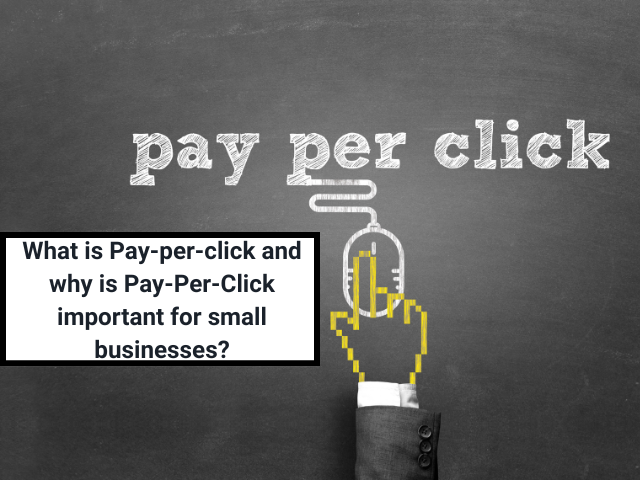
Pay-Per-Click concept showing a click on a digital ad with growth icons, symbolizing business success.

What is Pay-per-click and why is Pay-Per-Click important for small businesses?

What is Pay-per-click and why is Pay-Per-Click important for small businesses? What is Pay-per-click and why is Pay-Per-Click important for small businesses? Pay-per-click (PPC) is a digital advertising model that allows businesses to display their ads on search engine results pages (SERPs), websites, or social media platforms and pay a fee only when a user clicks on their ad. It is an effective online marketing strategy that offers businesses the opportunity to drive targeted traffic to their websites and increase brand visibility. PPC works on an auction-based system, where advertisers bid on specific keywords or target demographics to display their ads. When a user enters a search query or visits a website that matches the keywords or demographics chosen by the advertiser, the ad is shown. The position of the ad on the SERP or website is determined by a combination of the bid amount and the ad’s relevance to the search query or website content. While PPC offers numerous benefits, it is important to note that it requires expertise and ongoing management. Creating effective ad copy, choosing the right keywords, and optimising campaigns for maximum performance can be complex tasks. Therefore, many businesses choose to work with digital marketing professionals or agencies to ensure their PPC campaigns are executed effectively. Why is Pay-Per-Click important for small businesses? Pay-per-click (PPC) advertising is particularly important for small businesses due to the numerous advantages it offers in terms of visibility, targeted reach, cost-effectiveness, and measurable results. In this article, we will explore why PPC is crucial for small businesses and how it can significantly contribute to their growth and success. One of the key benefits of PPC advertising is the ability to gain instant visibility and exposure. Unlike organic search engine optimization (SEO) strategies that can take months to yield results, PPC allows small businesses to appear on search engine results pages (SERPs) or relevant websites immediately. This instant visibility ensures that small businesses can quickly establish their online presence and reach potential customers who are actively searching for products or services in their industry. 2. Targeted Reach: PPC offers precise targeting capabilities, allowing small businesses to reach their specific target audience. With PPC, businesses can select specific keywords, demographics, geographic locations, and even the time of day to display their ads. This level of targeting ensures that ads are shown to the most relevant audience, increasing the chances of engagement and conversion. Small businesses can focus their budget on reaching potential customers who are more likely to be interested in their offerings, resulting in a higher return on investment (ROI). 3. Cost-Effectiveness: PPC advertising is cost-effective for small businesses as it allows them to have control over their budget. Unlike traditional advertising methods that often require a significant upfront investment, PPC campaigns can be launched with a relatively small budget. Small businesses can set a daily or monthly budget for their PPC campaigns and only pay when someone clicks on their ads, hence the name “pay-per-click.” This pay-per-click model ensures that businesses are only charged for actual engagement, making it a cost-effective option for small businesses with limited resources. 4. Measurable Results: PPC advertising provides small businesses with measurable results and valuable insights. With PPC, businesses have access to detailed metrics such as click-through rates (CTR), conversion rates, cost per click (CPC), and return on ad spend (ROAS). These metrics allow small businesses to track the performance of their campaigns, measure the effectiveness of their ads, and make data-driven optimizations. By continuously monitoring and analyzing the results, small businesses can refine their PPC strategies to achieve better outcomes and maximize their advertising budget. 5. Flexibility and Control: PPC advertising offers small businesses flexibility and control over their campaigns. Businesses can easily create, manage, and adjust their PPC campaigns based on their goals, budget constraints, or market conditions. They have the freedom to experiment with different ad copy, keywords, and targeting options to optimize their campaigns for better performance. This flexibility allows small businesses to adapt their advertising strategies in real-time and make informed decisions to drive maximum results. 6. Compete with Larger Competitors: PPC levels the playing field for small businesses, enabling them to compete with larger competitors in the online marketplace. With effective PPC campaigns, small businesses can secure prominent ad placements on SERPs, even in the presence of bigger brands. By targeting specific niches or local markets, small businesses can reach their target audience and gain a competitive advantage. PPC allows small businesses to showcase their unique value proposition and attract customers who may not be aware of their existence otherwise 7. Enhanced Local Visibility: For small businesses that primarily cater to local customers, PPC advertising can significantly enhance their local visibility. With location-based targeting options, small businesses can ensure that their ads are displayed to users searching for products or services in their specific geographic area. This hyper-local targeting helps small businesses capture the attention of potential customers who are physically close to their store or service area. By leveraging local PPC campaigns, small businesses can drive foot traffic and increase sales in their local market. 8. Testing and Market Research: PPC provides small businesses with a platform for testing and market research. By running PPC campaigns, businesses can gather valuable data on user behavior, preferences, and response to different ad variations. This information can be utilized to refine marketing strategies, improve product offerings, and tailor messaging to better resonate with the target audience. PPC serves as a valuable testing ground for small businesses to experiment, learn, and make informed decisions based on real-time market insights. Conclusion In conclusion, PPC advertising is of utmost importance for small businesses as it offers instant visibility, precise targeting, cost-effectiveness, measurable results, flexibility, and the opportunity to compete with larger competitors. With the ability to reach a targeted audience, control budgets, and analyze performance metrics, small businesses can effectively allocate their resources and maximize the impact of their online marketing efforts. By leveraging the power of PPC, small businesses can enhance …

What is Pay-per-click and why is Pay-Per-Click important for small businesses? Read More »

Top 10 advantages of MySQL

 Top 10 advantages of MySQL 

Top 10 advantages of MySQL MySQL is a powerful open-source relational database management system (RDBMS) that has gained immense popularity among developers and businesses. It provides a robust and scalable solution for efficiently managing large volumes of data. In this article, we will explore MySQL’s fundamentals, key features, and why it is a preferred choice for many applications. What is MySQL? MySQL is a widely used RDBMS that allows users to store, organize, and retrieve data in a structured manner. MySQL uses the Structured Query Language (SQL) to manage the data stored in its databases. Key Features of MySQL Scalability: MySQL can handle large amounts of data and high-traffic websites efficiently, making it suitable for applications with growing data needs. Speed and Performance: With its optimized architecture, MySQL delivers excellent performance, enabling fast data retrieval and processing. Flexibility: It supports various operating systems, including Windows, Linux, and macOS, and offers compatibility with multiple programming languages, such as PHP, Python, and Java. Security: MySQL provides robust security features, including user authentication, data encryption, and access control, to protect sensitive information. Reliability:  It offers high availability and fault tolerance through features like replication, which ensures data redundancy and backup. MySQL Data Storage MySQL organizes data into tables, which consist of rows and columns. In a dataset, each row represents a unique entry or piece of information, while each column represents a specific characteristic or piece of data associated with that record. The tables are related to each other through relationships defined by primary and foreign keys. MySQL Query Language (SQL) SQL is the language for interacting with MySQL databases. It provides a set of commands for creating, modifying, and retrieving data from the database. Some commonly used SQL statements in MySQL include: SELECT: Used to retrieve data from one or more tables based on specified conditions. INSERT: It is utilized for inserting a fresh record or data into a table. UPDATE: To alter or make changes to the existing records within a specific table. DELETE: Used to remove records from a table. Top 10 Benefits of Learning MySQL 1. Widely Used and In-Demand Skill MySQL is one of the most popular RDBMS in the world, widely adopted by both small and large organisations. By learning MySQL, you gain a highly sought-after skill that is in high demand across industries. This can significantly boost your career prospects and open up opportunities for job growth. 2. Easy to Learn and Use MySQL has a user-friendly interface and a straightforward syntax, making it relatively easy to learn and use, especially for beginners. Its simplicity and intuitive design allow users to quickly grasp the basics of database management and start working with databases efficiently. 3. Versatile and Scalable MySQL is known for its versatility and scalability. It can handle small-scale projects as well as large-scale applications with ease. Whether you are building a personal website or managing a complex enterprise database, MySQL provides the flexibility to scale your data management needs as your project grows. 4. Cost-Effective Solution MySQL is an open-source database system, which means it is free to use and has a vibrant community of developers constantly improving its features and functionality. Choosing MySQL eliminates the need for expensive licensing fees associated with proprietary database systems, making it a cost-effective solution for individuals and businesses. 5. Excellent Performance MySQL is designed to deliver excellent performance even under high loads. It offers advanced optimisation techniques, such as indexing and caching, which enhance query execution speed and improve overall database performance. This makes it ideal for applications that require fast and efficient data retrieval. 6. Strong Community Support MySQL has a large and active community of developers, database administrators, and enthusiasts who provide extensive support, share knowledge, and contribute to its continuous development. Access to this vast community ensures that you can find solutions to problems, learn from others’ experiences, and stay up to date with the latest trends and best practices. 7. Compatibility with Various Technologies MySQL seamlessly integrates with popular web development frameworks, content management systems (CMS), and programming languages, including PHP, Python, and Java. This compatibility allows for smooth data integration and interaction between different technologies, making MySQL a versatile choice for building dynamic and interactive web applications. 8. Data Security and Reliability MySQL offers robust security features to protect sensitive data stored in databases. It supports user authentication, encryption, and access control mechanisms, ensuring that only authorized individuals have access to the data. Additionally, MySQL provides features like replication and backup, which ensure data redundancy and high availability, making it a reliable choice for critical applications. 9. Data Analysis and Reporting MySQL provides powerful tools and functions for data analysis and reporting. It supports complex queries, joins, and aggregations, allowing you to extract meaningful insights from your data. With MySQL, you can generate reports, visualize data, and make informed business decisions based on accurate and up-to-date information. 10. Transferable Skills Learning MySQL not only equips you with database management skills specific to this RDBMS but also provides you with a transferable skillset applicable to other database systems. The knowledge and experience gained from using MySQL can be easily applied to RDBMS platforms, such as Oracle or Microsoft SQL Server, broadening your opportunities and making you adaptable in the ever-evolving field of data management. Conclusion In conclusion, learning MySQL offers numerous benefits, including increased career prospects, versatility, cost-effectiveness, excellent performance, and strong community support. Whether you are a developer, data analyst, or business professional, acquiring MySQL skills can enhance your proficiency in managing data and provide you with a competitive edge in the job market. Invest your time and effort in learning MySQL, and you will reap the rewards of this valuable and widely used database management system. Ready to get started learning the Top 10 advantages of MySQL?  Register for a free demo. Get more details regarding Powerpoint Phone no. 9988-500-936 Address SCF 22, First floor, GTB Market, Khanna Website www.microwavecomputer.com Opening Hours 08:30 am – 06:00 pm What are the …

 Top 10 advantages of MySQL  Read More »

Scroll to Top