+91 9988 500 936

info@microwavecomputer.com

Mon - Sat: 8:30 am- 6:00 pm

#SEOCourse

HTML vs JavaScript:

 HTML vs JavaScript: Which Should You Learn?

HTML and JavaScript are both essential tools for web development, but they serve different purposes and have distinct roles in creating interactive websites. In this article, we will explore the differences between HTML and JavaScript, their strengths, and why learning both is crucial for aspiring web developers. HTML, short for Hypertext Markup Language, is the backbone of web pages. It provides the structure and organisation of content, such as headings, paragraphs, images, and links. HTML uses tags to define elements within a web page. These tags are enclosed in angle brackets (<>) and provide instructions to the web browser on how to display the content. On the other hand, JavaScript is a dynamic programming language that enables interactivity and enhances the functionality of web pages. It allows developers to create interactive elements, manipulate content, and respond to user actions. JavaScript is primarily used for client-side scripting, meaning it runs directly in the web browser and can make changes to the page without needing to communicate with the server. Now that we have a brief overview of HTML and JavaScript, let’s delve deeper into their respective features and benefits. HTML vs JavaScript: Which Should You Learn? HTML: Structure and Content HTML is the foundation of any web page. It provides the structure and content that browsers understand and display. Here are some important characteristics and advantages of HTML: 1. Structure: HTML defines the structure of a web page by using elements like headings, paragraphs, lists, tables, forms, and more. These elements organise the content and provide semantic meaning, making it easier for search engines to understand the page. 2. Accessibility: HTML supports accessibility features that allow web pages to be accessible to users with disabilities. By using proper semantic markup, developers can ensure that screen readers and other assistive technologies can interpret the content accurately. 3. Cross-platform compatibility: HTML is supported by all major web browsers and works consistently across different platforms. This ensures that web pages built with HTML can be accessed by users on various devices and operating systems. 4. SEO-friendly: HTML provides the necessary structure and tags to optimise web pages for search engines. By using proper heading tags, meta descriptions, alt attributes for images, and other SEO techniques, developers can improve the visibility and ranking of their web pages. 5. Easy to learn: HTML has a relatively simple syntax and a limited set of tags. This makes it easy for beginners to grasp the fundamentals and start building web pages quickly. JavaScript: Interactivity and Functionality While HTML provides the structure and content of a web page, JavaScript adds interactivity and enhances the functionality. Let’s explore some key features and benefits of JavaScript: 1. Event handling: JavaScript allows developers to respond to user actions such as clicks, mouse movements, keystrokes, and form submissions. This enables the creation of interactive elements like dropdown menus, sliders, carousels, and more. 2. DOM manipulation: JavaScript can manipulate the Document Object Model (DOM) of a web page. The DOM represents the structure of the HTML document, and JavaScript can dynamically modify its elements, attributes, and styles. This enables real-time updates and changes to the page without requiring a full page reload. 3. Form validation: JavaScript can validate user input on forms before submitting the data to the server. This ensures that users provide correct and properly formatted information, reducing errors and enhancing the user experience. 4. Asynchronous communication: JavaScript enables asynchronous communication with the server using techniques such as AJAX (Asynchronous JavaScript and XML) and the newer Fetch API. This allows web pages to retrieve data from the server and update specific parts of the page without reloading the entire content. 5. Libraries and frameworks: JavaScript has a vast ecosystem of libraries and frameworks that simplify web development tasks. Popular libraries like jQuery, React, and Vue.js provide ready-made components and abstractions, speeding up development and enhancing productivity. Learning HTML and JavaScript Together While HTML and JavaScript have distinct roles in web development, they are interdependent and work together to create rich and interactive web pages. Here are some reasons why learning both is crucial: 1. Seamless integration: HTML and JavaScript seamlessly integrate to create dynamic and interactive web pages. By combining HTML’s structure with JavaScript’s interactivity, developers can build engaging user interfaces and provide a smooth user experience. 2. Full control over web pages: Learning both HTML and JavaScript gives you full control over the appearance and behaviour of your web pages. HTML defines the structure and content, while JavaScript adds interactivity, allowing you to create custom functionalities tailored to your project’s requirements. 3. Career opportunities: Proficiency in both HTML and JavaScript expands your career opportunities as a web developer. Most job postings for web developers require knowledge of both technologies, and having expertise in both will make you a more valuable candidate. 4. Flexibility and versatility: HTML and JavaScript provide flexibility and versatility in web development. They can be used together or independently, depending on the project’s needs. Additionally, once you have a solid foundation in HTML and JavaScript, learning other web development languages and frameworks becomes easier. 5. Enhanced problem-solving skills: Learning HTML and JavaScript together improves your problem-solving skills. Web development often involves troubleshooting and debugging issues that arise in both the structure and interactivity of a web page. Mastering both HTML and JavaScript equips you with a holistic understanding of web development and enables you to solve a wider range of problems. Conclusion In conclusion, both HTML and JavaScript are crucial tools in web development, each with its distinct role. HTML provides the structure and content of web pages, while JavaScript adds interactivity and enhances functionality.  Learning both languages is essential for aspiring web developers as they complement each other and work together to create dynamic and engaging web experiences. By understanding the strengths and capabilities of HTML and JavaScript, you can build robust and interactive web applications that meet the needs of modern users. Ready to get started learning  HTML vs JavaScript: Which Should You Learn?  Register …

 HTML vs JavaScript: Which Should You Learn? Read More »

What is AutoCAD? Is AutoCAD still in demand? 

What is AutoCAD? Is AutoCAD still in demand? Introduction AutoCAD is a powerful computer-aided design (CAD) software widely used in various industries for creating precise and detailed drawings, models, and designs. Developed by Autodesk, AutoCAD has become a cornerstone of design and drafting processes, revolutionising the way professionals in architecture, engineering, construction, and other fields create and communicate their designs. As an introductory tool, AutoCAD provides a user-friendly interface that allows users to generate 2D and 3D drawings with precision and efficiency. Its extensive range of features and tools enables designers to bring their concepts to life, whether it’s architectural floor plans, mechanical parts, electrical schematics, or complex 3D models. In AutoCAD, users can create, modify, and annotate objects with precision using a variety of drawing tools such as lines, arcs, circles, polygons, and more. The software offers powerful editing capabilities, allowing for easy manipulation of objects, modification of dimensions, and precise positioning of elements. AutoCAD 3D modelling capabilities enable users to create three-dimensional representations of objects and environments. With tools like extrusion, lofting, and revolving, users can build complex shapes and structures. The software also supports the application of materials, lighting effects, and rendering to enhance the visual representation of 3D models. AutoCAD’s parametric design functionality allows users to establish relationships between objects and define their geometric and dimensional properties. This feature enables designers to make changes to the design and have the associated elements update automatically, improving efficiency and reducing errors. Collaboration is facilitated in AutoCAD through features like file sharing, markup tools, and annotation capabilities. Multiple users can work on the same drawing simultaneously, making it easier to exchange feedback and iterate on designs. AutoCAD also supports interoperability, allowing the import and export of files in various formats, promoting seamless integration with other software and workflows. Additionally, AutoCAD offers customisation options to tailor the software to specific needs. Users can create macros, scripts, and custom commands to automate repetitive tasks, increasing productivity. The software also supports the development of specialised add-ons and plugins, further expanding its functionality and adaptability. Learning AutoCAD provides individuals with a versatile skill set that is highly valued in many industries. It empowers designers, engineers, and architects to create accurate, professional-grade drawings and models, improving communication, visualisation, and decision-making processes. With AutoCAD’s widespread adoption and continuous development, proficiency in the software opens doors to a variety of career opportunities and enhances professional growth in design-related fields. What is AutoCAD? Is AutoCAD still in demand? Is AutoCAD still in demand?  The process of identifying and examining searYes, AutoCAD is still in high demand in various industries. Despite the emergence of newer design and drafting software, AutoCAD continues to be widely used and recognised as a standard tool for professionals in architecture, engineering, construction, and related fields. Here are some reasons why AutoCAD remains in demand: What Makes Keyword Research Vital?The following explains why keyword research is essential to SEO: 1. Established Industry Standard: AutoCAD has been an industry leader for decades, and its robust features and reliability have made it a widely adopted tool in many sectors. Many organisations have existing workflows, processes, and projects built around AutoCAD, making it a necessity for professionals working in those industries. 2. Wide User Base: AutoCAD has an extensive user base, including professionals, students, and educators. This broad adoption creates a demand for individuals with AutoCAD skills, as organisations seek to hire professionals who can efficiently work with existing AutoCAD projects or collaborate with partners and clients who use the software. 3. Versatility and Compatibility: AutoCAD’s versatility allows it to be used in diverse design disciplines, from architecture and civil engineering to mechanical and electrical design. Additionally, AutoCAD’s compatibility with other software and file formats makes it a valuable tool for data exchange and collaboration within multi-software workflows. 4. Industry-Specific Extensions: AutoCAD offers industry-specific versions and extensions, such as AutoCAD Architecture, AutoCAD Mechanical, and AutoCAD Electrical, tailored to specific disciplines. These specialised versions provide additional tools and features that cater to the unique needs of professionals in those industries, further enhancing the demand for AutoCAD. 5. Legacy Projects and Documentation: Many organisations have extensive project archives and documentation created using AutoCAD. Accessing and maintaining these legacy files often requires AutoCAD expertise. Professionals with AutoCAD skills are sought after for tasks like updating or modifying existing designs, converting drawings to newer formats, or extracting critical information from historical project files. 6. Continued Development and Updates: Autodesk, the developer of AutoCAD, consistently updates and enhances the software to meet evolving industry requirements and incorporate new technologies. This commitment to development ensures that AutoCAD remains relevant and up-to-date, ensuring its demand among professionals and organisations. 7. Academic Integration: AutoCAD is widely taught in educational institutions as part of design and engineering programs. As a result, many students graduate with AutoCAD skills, creating a steady supply of individuals with proficiency in the software. The demand for AutoCAD professionals is fueled by the need to bridge the gap between academic knowledge and practical application in real-world projects. Conclusion Considering these factors, it is clear that AutoCAD’s demand persists across industries. Proficiency in AutoCAD remains a valuable skill that can enhance career prospects and open doors to opportunities in architecture, engineering, construction, manufacturing, and related fields. Ready to get started learning what AutoCAD is? Is AutoCAD still in demand? Register for a free demo Get More Details Regarding Digital Marketing Course Phone no. 9988-500-936 Address SCF 22, First floor, GTB Market, Khanna Website www.microwavecomputer.com Opening Hours 08:30 am – 06:00 pm What are the benefits of learning coding?   Top 10 advantages of MySQL   HTML vs JavaScript: Which Should You Learn? What is the importance of Microsoft Word?  What is Affiliate marketing and its most significant benefits? Leave a Reply Cancel Reply Logged in as admin. Edit your profile. Log out? Required fields are marked * Message*

SEO Keyword Research: The Cornerstone of Internet Success

SEO Keyword Research: The Cornerstone of Internet Success Introduction In today’s digital world, SEO (Search Engine Optimization) is a vital part of any online marketing strategy. Whether you’re a blogger, business owner, or digital marketer, showing up on the first page of Google is a goal we all chase. But how do you get there? It all starts with one essential step — keyword research. BEST OPTIMIZED KEYWORDS RESEARCH Keyword research: what is it?The process of identifying and examining search phrases that users type into search engines like Google is known as keyword research. These keywords assist you in determining the search terms used by your target audience and how to produce content that speaks to their interests. To put it simply, it’s similar to speaking to your audience in their language through your content. For instance, if you own a bakery in Mumbai, consumers may look up terms like “custom cakes near me” or “best bakery in Mumbai.” These could be your keywords. What Makes Keyword Research Vital?The following explains why keyword research is essential to SEO: Enhanced Visibility: Your website may rank on the first page of search results if you use the appropriate keywords. Targeted Traffic: It draws in the appropriate customers who are genuinely trying to find your goods or services. Improved Content Ideas: Researching keywords enables you to determine the kind of content that your target audience is interested in. Increased Conversion Rates: People are more inclined to act when they find precisely what they’re looking for. Competitive advantage: You may develop a more intelligent SEO strategy if you are aware of the terms that your rivals rank for. Recognizing the Intent of SearchKnowing search intent, or why someone is seeking, is one of the most crucial aspects of keyword research. Four categories of search intent exist: Informational: Seeking knowledge, such as “how to bake a cake.” Navigational: Searching for a certain website (for example, “Facebook login”). Transactional: Prepared to make a purchase (for example, “buy shoes online”). Comparing: before purchasing (e.g., “best laptops under 50,000”) is a commercial investigation. It’s critical to align your material with the right intent. Provide information to those who wish to learn. Provide a product or service page if they’re prepared to make a purchase. How to Conduct Step-by-Step Keyword Research 1. Generate a list of ideas Start with general subjects associated with your specialty. For instance, if you run a blog about fitness, some of your subjects could be: Loss of weight Plans for a working exercise Healthy recipes At-home workouts 2. Make Use of Tools for Keyword Research It’s time to translate those subjects into targeted keywords now. Use tools, either free or paid, such as: Google Keyword Planner (Free) Ubersuggest (Paid and Free) Ahrefs (Paid) SEMrush (Premium) AnswerThePublic (Free) Trends on Google (Free) These instruments will display: Volume of monthly searches Keyword challenge Cost per click, or CPC Suggestions for related keywords 3. Seek Out Long-Tail Terms Long-tail keywords are more specialized, longer phrases such as: “How to reduce abdominal fat at home” “greatest yoga poses for novices” Because there is less competition, these may have a lower search volume but a greater ranking chance. 4. Examine the Keywords of Your Rivals Use tools such as Ahrefs or SEMrush to see what your competitors are ranking for. Examine their most popular pages to see which keywords get the most traffic. After that, you can develop more thorough or superior content centered around related keywords. 5. Sort and Order Keywords Put related keywords in one group. For instance: “Digital marketing course“ is the main keyword.Related terms: “top course on digital marketing,” “near me digital marketing course,” “training in online marketing” Next, set priorities according to: Pertinence Volume of searches Level of competition Tips for On-Page SEO Following Keyword Research Here’s how to use keywords successfully after you have them: Title Tag: Make sure the page title contains your primary keyword. Meta Description: Use the keyword to create an engaging description. URL: Use the keyword and keep it brief. Headings (H1, H2, etc.): Naturally, make use of keywords. Content Body: Compose educational material that responds to the user’s query. Image ALT Text: Use pertinent keywords to describe photos. Internal Links: Provide links to more pertinent posts or pages on your website. Typical Errors to Avoid When Stuffing Keywords: Excessive keyword repetition can lower your ranks. Ignoring Search Intent: Composing content that is inappropriate for the search. Focusing Only on Broad Keywords: These are very competitive and challenging to rank. Not Updating Old Content: Adding new keywords to old content can improve rankings. Conclusion Researching keywords is a continuous process rather than a one-time event. Algorithms are updated, trends shift, and user behavior changes. You can better serve your audience with your content if you have a better understanding of what they are searching for. Understanding keyword research will provide you a competitive advantage whether you’re managing a blog, an online store, or a corporate website. Be consistent, start small, and keep in mind that “Good SEO starts with good keyword research.” Ready to get started learning the Digital Marketing Course? Register for a free demo Get More Details Regarding Digital Marketing Course Phone no. 9988-500-936 Address SCF 22, First floor, GTB Market, Khanna Website www.microwavecomputer.com Opening Hours 08:30 am – 06:00 pm SEO Keyword Research: The Cornerstone of Internet Success Social Media Marketing for Websites: A Comprehensive Guide How to Increase Your Traffic Website: Complex Guide Content strategies – Marketing: Complex Guide The Ultimate Website Development Guide: Building Your Digital Presence Leave a Reply Cancel Reply Logged in as admin. Edit your profile. Log out? Required fields are marked * Message*

SEO and Content Courses – Marketing: The Road to Digital Success

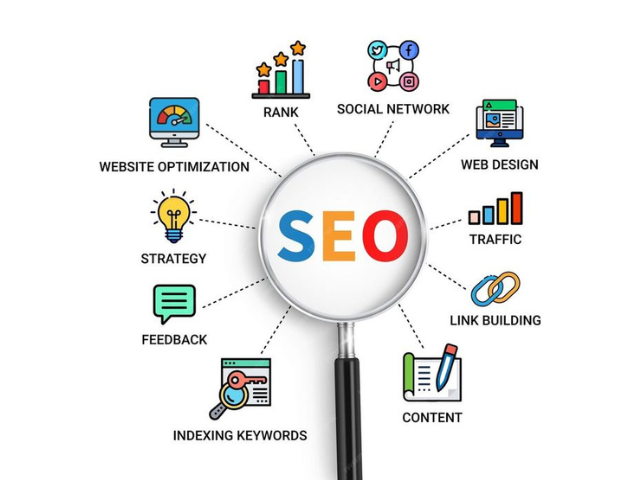
SEO and Content Courses – Marketing: The Road to Digital Success Introduction In the digital age of businesses and individuals, they are trying to establish a strong presence on the Internet. Two key strategies that contribute to this success are research optimization (SEO) and the content market. Development of these skills can increase visibility, increase website traffic and increase interaction. Whether you’re a beginner or a marketing specialist looking for your skills, subscribe to reference and content marketing lessons can change the game. Why are referencing and content important? SEO and content – The market goes hand in hand. The SEO guarantees that your content is discoverable, while content marketing guarantees that visitors find precious, engaging and informative equipment. Higher search rankings: Well -optimized content is classified above on search engines, increasing visibility. Increased organic traffic: A great SEO method leads to free organic traffic and reduces your reliance on paid ads. Best User Experience: High-quality content improves user engagement and increases visits and conversions on your website. Brand Management: Create you as an expert in your local area by providing consistent and valuable content. Economic Marketing: Unlike paid campaigns, content marketing using SEO offers long-term benefits without a certain amount of money. Reference and Content Lessons – MarketReference and Content Marketing courses cover a wide range of subjects on student equipment related to industry skills.  Here’s what you can expect: 1. SEO Fundamentals  Introduction to search engines and how they work Understanding Google’s ranking algorithms Keyword research and selection On-page and off-page SEO Technical SEO (site structure, mobile optimization, page speed, etc.) 2. Content Strategy and Development Crafting compelling and high-quality content Understanding different content formats (blogs, videos, infographics, etc.) Storytelling techniques for better audience engagement Writing for search intent and user experience 3. Links and Propaganda The importance of reverse linking How to build white lines against a black shed How to buy high quality of opposite links Digital Public Relations Strategy and Strategy Publishing 4. SEO Tools and Analysis Google Analytics and Google Search Console Keyword research tools (Ahrefs, Semrush, Moz, etc.) Content optimization tools (SEO Yoast, SEO Surfer, etc.) Monitoring and reporting 5. Local and Electronic Trade SEO Optimizing local search results (my business, quotes, etc.) SEO strategies for e-commerce (product pages, category pages, scheme markings, etc.) Significance of SEO and Content Marketing in 2025 SEO and content marketing are crucial in 2025 for driving organic traffic, improving search engine rankings, and increasing brand visibility. With AI-driven search algorithms and evolving user behavior, high-quality content ensures better engagement and credibility. A strong SEO strategy helps businesses stay competitive, attract leads, and boost conversions effectively. Benefits of admission to SEO and content marketing courses Recognized Industry Certification: Improve your resume and trust.   Updated knowledge: keeps you informed of the latest referencing trends and algorithm updates.   Practical experience: many courses offer practical projects and case studies in the real world.    Networking Opportunities: Connect with industry experts and peers for collaboration.   How to choose the right course With so many options available, choosing the right course is overwhelming.  Level of skill: select a course that corresponds to your experience (beginner, intermediate, advanced). Course content: Make sure that it covers the necessary SEO and topics of content -marketing.  Instructor Experience: Find lessons given by industry experts. Notifications and Notes: Please check the comments of former students.  Certification: If you require a certificate to grow your career, check that authority. Conclusion SEO and Content – Markets are a powerful tool in the digital marketing landscape. Registration during the course will help you manage your website, increase branding authority and develop the skills you need to develop the skills you need to create potential customers. Whether you’re a company owner, a freelancer or a marketing expert, SEO mastery and content markets give you a competitive advantage in the modern digital world. Start your studies today and watch your online presence grow! Ready to get started learning SEO and Content Marketing ? Register for a free demo Get More Details Regarding SEO and Content Marketing Phone no. 9988-500-936 Address SCF 22, First floor, GTB Market, Khanna Website www.microwavecomputer.com Opening Hours 08:30 am – 06:00 pm SEO and Content Courses – Marketing: The Road to Digital Success  Introducing Basic IT: A beginner's guide Digital Marketing Course : A Gateway to a Successfull Carrer in the Modern Age This is Why you Should learn WordPress in 2024 Scope of Tally Courses in India – Career Prospects, And More Leave a Reply Cancel Reply Logged in as admin. Edit your profile. Log out? Required fields are marked * Message*

Scroll to Top